

The History of The Gypsy Vanner
In the years following the Second World War, a visionary dream began to take shape among the traveling people of Great Britain — often referred to collectively as Gypsies, a term used in Britain and Ireland to include Romani families, Irish and Scottish Travellers, and the Didikoi. Together, they shared responsibility for bringing to life a new and remarkable breed.
Their ambition was bold: to create the ultimate draught horse to pull their brightly painted caravans, carrying the most precious cargo of all — their families and their way of life. They envisioned a smaller Shire-type horse, adorned with greater feather, richer color, and a softer expression. The horse would need strength and athleticism, gentleness and endurance — and above all, the ability to live closely among nomadic families and their children.
Over the decades, both known and unknown families across Great Britain and Ireland continued refining this special horse. Exceptional examples were discreetly exchanged for considerable sums, reflecting the high value placed upon them. Within a society that often conducted its affairs privately and largely outside formal written record, this developing breed became a profound source of pride among the British traveling people.
Then, in 1995, on a quiet day in the English countryside, two Americans — Dennis and Cindy Thompson — encountered a sight that would change their lives. As owners of more than 700 animals, they believed they had seen nearly everything. Yet when they glimpsed a striking black-and-white horse standing in a field, they knew this was something different.
The farmer informed them that the horse belonged to a Traveller, who also kept a band of similar mares out of public view. Intrigued, the Thompsons became determined to uncover the story behind the small stallion known as “The Log.” What began as curiosity would become a years-long journey into a vibrant and often misunderstood culture — and into its most treasured possession.
Invited by The Log’s owner, Roy Evans, the Thompsons became the first Americans to attend the historic Appleby Horse Fair — the oldest horse fair in the world — where tradition and the spirit of the traveling community converge. Over ten transformative days, they immersed themselves in the world of the Gypsy horse, forging relationships, gathering knowledge, and listening carefully to breeders describe what was — and what was not — the breed.
Their dedication bore fruit. They uncovered the post-war vision that shaped the horse. They identified key foundational stallions, including “Sonny Mays” and “The Coal Horse,” and documented the profound influence they carried within the breed. They traced the genetic tapestry woven from the Shire, Clydesdale, and Dales Pony — and through them, the original Friesian influence.
They followed the lineage of “The Log” across three countries. They stood before the Irish Sea alongside Tom Price and his DNA-verified stallion, The Old Horse of Wales. There, Tom recalled the birth of Cushti Bok with unmistakable emotion: “He was born right there. I’ll never forget that day. I held him in my arms and knew he was special — the best colt I have ever bred.”
Their research revealed that Cushti Bok had once been proclaimed “the most sought-after colt in all of Great Britain” at Appleby Fair.
But the journey was not complete.
As the breed prepared for introduction to the United States, it became essential to establish a name that would distinguish this carefully developed horse from similar stock bred without selectivity for commercial markets. Sixty days before its formal introduction in America, respected breeders from across the traveling community agreed upon the official name: Gypsy Vanner Horse.
Dennis and Cindy meticulously documented the breed standard — a cumulative effort built upon years of listening to the spoken wisdom of dedicated breeders. On November 24, 1996, they imported the first two Gypsy Vanner mares to America, Bat and Dolly, arriving in Newberg, New York. Cushti Bok (formerly The Log) and The Gypsy King followed in 1997 and 1998.
In total, they invested more than one million dollars to import fourteen mares and two stallions, marking the formal introduction of the breed to the United States in June 1998 in Louisville, Kentucky — and online through the now-historic website GypsyVannerHorse.com.
Most significantly, in November 1996, they founded the Gypsy Vanner Horse Society (GVHS), establishing the first registry in the world to formally recognize a breed developed by the Gypsies of Great Britain and Ireland — grounded in extensive study and direct cultural engagement.
Today, more than 12,000 Gypsy Vanner horses are registered across various registries worldwide.
Dennis and Cindy’s intention — and our intention at Le Rêve Noir — remains the same: to preserve the breed standard as a type defined by structure, not color, and to honor the wishes of the original creators — the known and unknown Romani families whose generations of dedication shaped this extraordinary horse.
Long before the breed’s popularity in the Americas, respected families with horse breeding in their blood devoted generations to creating an animal of uncommon quality. To alter that genetic foundation or disregard its principles risks diminishing the very essence that made the Gypsy Vanner so remarkable to begin with.
To explore our horses who descend directly from many of the foundational legends mentioned above — including Dolly, The Gypsy King, Cushti Bok, and others — we invite you to discover our program.


A traditional living wagon pulled by two Gypsy Vanner Horses
Foto © Gypsy Vanner Horse Society
Cindy Thompson first met The Log in England. When the stallion was handed over for shipment to the United States, his Romani owner offered a farewell in his native tongue: “Cushti Bok” — meaning “good luck.” Once in America, The Log was renamed Cushti Bok, a fitting name for the first of a recognized breed and the beginning of a quiet revolution. To learn more, we invite you to visit Gypsy Gold Farm.
Foto © Gypsy Gold Farm
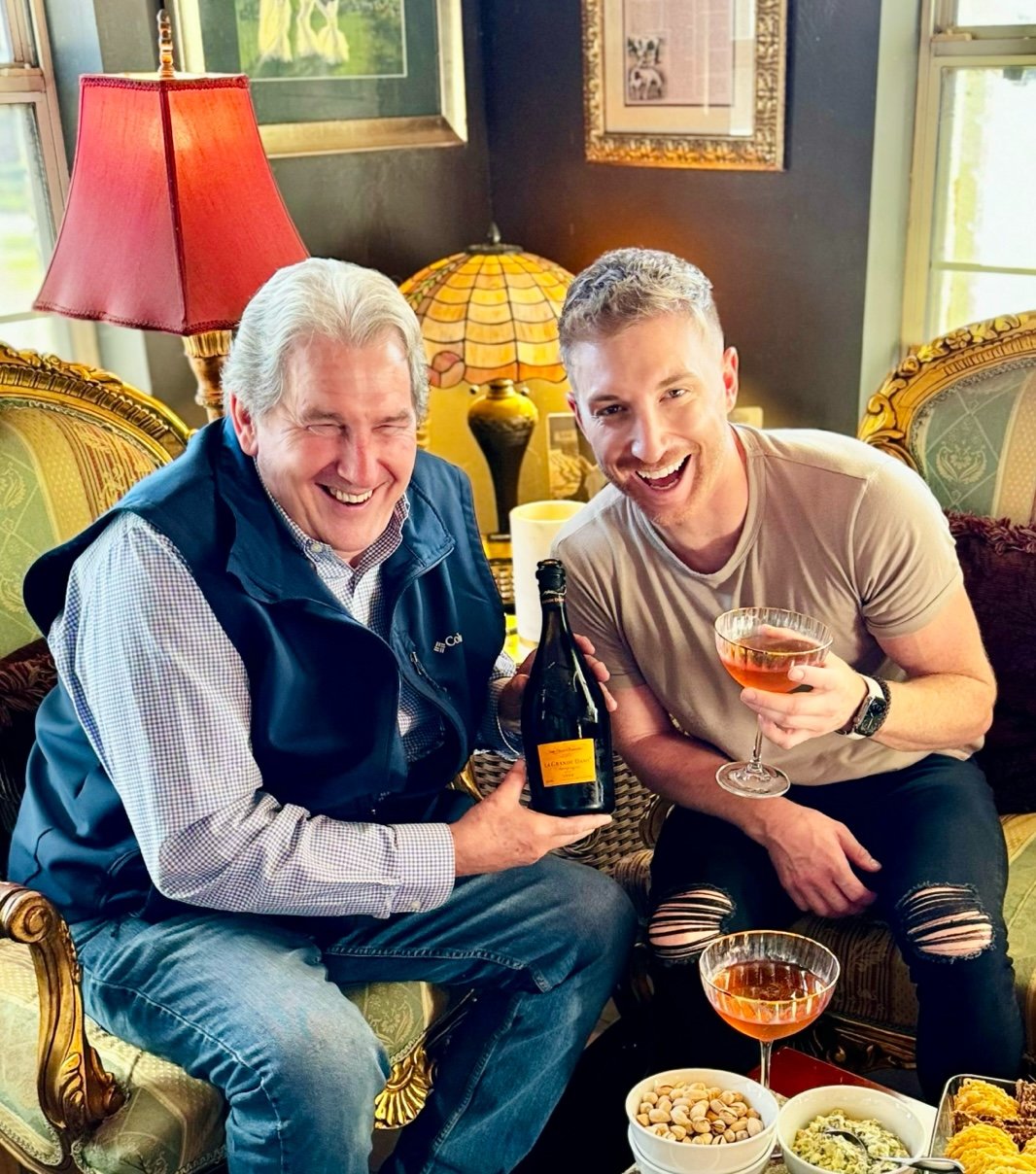
Dennis Thompson, Erin Thompson y Cameron Silva celebrating 28 years since the arrival of Bat & Dolly to the United States in November 1996, with a bottle of La Grande Dame Vintage 1996, discovered by complete accident, perfect for the celebration of the first two “great ladies”.
