La Ilusión de la Melanina: Color en el Vanner sin Sacrificar la Genética
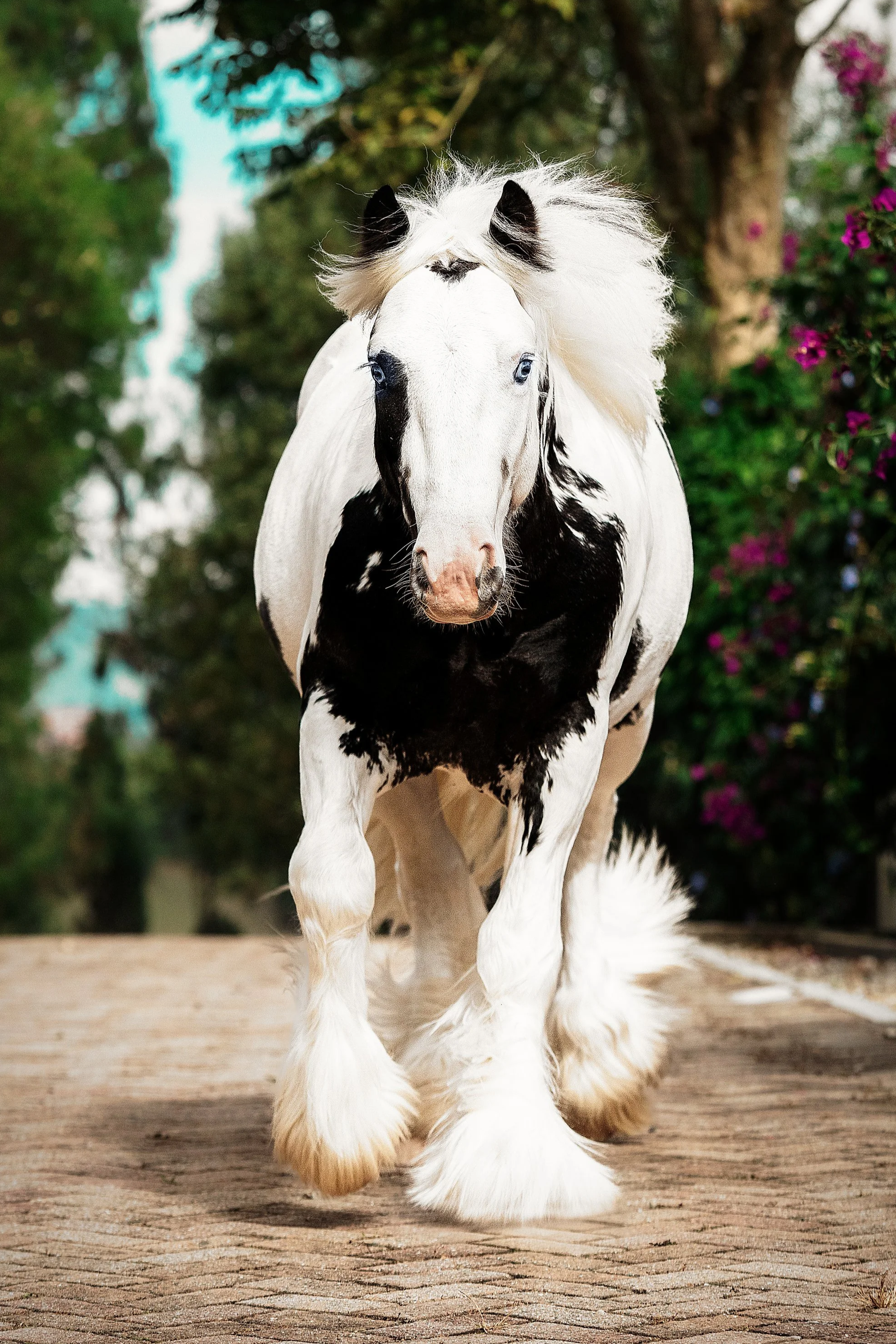
JIMMY MCCANN’S ROMANY KING | 2024 Miniature Gypsy Vanner Colt
Una advertencia para criadores en Estados Unidos y Sudamérica sobre la ruina genética de atajar líneas de sangre patrimoniales por pelajes llamativos.
■ PUNTOS CLAVE
→ El pelaje pintado del Gypsy Vanner es la huella biológica directa de un sistema nervioso de baja adrenalina.
→ Tercerizar colores "exóticos" mediante cruces destruye la conformación de tiro y el temperamento sereno que un siglo de disciplina Romaní tardó en fijar.
→ Obtener color exclusivamente de líneas patrimoniales verificadas por ADN es el único camino que garantiza tanto integridad estructural como la mente dócil característica de la raza.
■ UNA CONEXIÓN INESPERADA: LOS ZORROS SOVIÉTICOS Y EL GYPSY VANNER
¿Para qué correr un riesgo alto para "robarse" un color de pelaje cuando los maestros constructores de Gran Bretaña ya se pasaron un siglo perfeccionando esos mismos tonos en un marco seguro y poderoso? Perseguir atajos cosméticos de razas de caballo liviano no es innovación, es un robo genético que cambia una mente dócil e invaluable por un patrón llamativo. A compradores en Estados Unidos y Sudamérica les están vendiendo cada vez más una ilusión peligrosa: un pelaje "exótico" envuelto alrededor de un animal estructuralmente comprometido, cuando esos mismos colores y patrones ya existen dentro de la raza.
En Gypsy Gold, en Ocala, Dennis Thompson suele guiar recorridos haciendo referencia a un estudio fascinante que explica por qué los caballos Romaní Gypsy desarrollaron su color. En 1959, genetistas soviéticos que domesticaban zorros salvajes hicieron un descubrimiento asombroso: al criar estrictamente por temperamentos dóciles, las crías empezaron a cambiar de color y mutaron espontáneamente pelajes sólidos hacia patrones pío (piebald).
Bioquímicamente, la melanina (que determina la pigmentación y el color del pelaje) y la adrenalina (la hormona que rige el miedo, las respuestas de lucha o huida, y el temperamento) están biológicamente ligadas.
Los icónicos pelajes pío (piebald) y overo (skewbald) del Gypsy Vanner no son logros estéticos accidentales. Los fundadores de la posguerra que crearon la visión detrás del Gypsy Vanner Horse deseaban un Shire pequeño, con más crin, más color y una cabeza más dulce; esa cría implacable para lograr esa visión, tanto de forma intencional como inadvertida, creó la raza que hoy conocemos como el Golden Retriever con cascos: el Gypsy Vanner Horse.
NOTE: Un verdadero Vanner es, antes que nada, un caballo de tiro pesado en formato reducido. No es una raza de color; los patrones de pelaje que existen orgánicamente dentro del registro original de la raza son los progenitores más confiables del tipo de cuerpo que los Gitanos británicos e irlandeses tenían en mente.
■ PATAS PELUDAS COMO MARCADOR DE GENÉTICA DE SANGRE FRÍA
Durante sus recorridos, Dennis también usa una analogía humorística y darwiniana sobre la evolución humana para explicar cómo funciona la genética del emplumado de patas en los caballos. Explica que como el pelo es un rasgo aditivo y recesivo, hay que criar "pelo con pelo" para mantenerlo o aumentarlo. Para ilustrarlo a sus visitantes, bromea diciendo que los humanos alguna vez parecían cavernícolas peludos. Sin embargo, con el paso de las generaciones los hombres fueron perdiendo el vello corporal grueso porque los machos escogían selectivamente a mujeres de piernas lisas como esposas.
El emplumado profuso de las patas que define a la raza está genéticamente ligado al sistema nervioso tranquilo y de movimiento pausado del Forest Horse prehistórico, el ancestro de todas las razas de tiro pesado. Al seleccionar intensamente por emplumado abundante, los criadores fijaron históricamente esa personalidad de sangre fría: calmada, gentil y de mecha lenta, propia del Forest Horse.
■ EL ROBO DE ALTURA
En los Andes de altura de Rionegro, Colombia, esta realidad biológica es cuestión de supervivencia. Pastando a 2,130 metros sobre Andisoles volcánicos, los caballos deben lidiar con pasto Kikuyu alto en oxalatos que fijan el calcio, lo cual puede causar una desmineralización ósea catastrófica en animales de estructura débil. En este entorno exigente, un caballo construido sobre atajos cosméticos carece del hueso plano y denso, la capacidad pulmonar masiva y el ritmo cardíaco estable que se requieren para prosperar.
En Le Rêve Noir observamos con creciente preocupación cómo a los entusiastas colombianos los seducen colores llamativos y "exóticos" importados de manadas comerciales europeas sin verificar. Para proteger la inversión de capital de nuestra región, debemos trazar una línea absoluta: el color debe obtenerse de dentro de las líneas patrimoniales originales, verificadas por ADN. Hacer lo contrario es cambiar una obra maestra genética por una falsificación frágil y de alta adrenalina, sin el temperamento característico de la raza.
■ PRIMERO LA ESTRUCTURA
Cruzar hacia razas de patas lisas o de sangre caliente para "robarse" un color reduce instantáneamente esta herencia genética a la mitad en la primera generación. Junto con la pérdida del pelo, se hace pedazos la integridad estructural del caballo. El pecho ancho, el lomo corto, el hueso plano en la rodilla y la poderosa grupa "apple butt" son reemplazados por articulaciones débiles y desparejas, y cuartos traseros estrechos y empinados.
En sus conversaciones con Cameron, Steve Down trazó una línea de distinción tajante entre los preservacionistas Romaní tradicionales, que dedicaron su vida a la cría, y esos comerciantes que él acusaba de "contaminar" las líneas de sangre, mezclar razas sin ningún criterio, y operar únicamente por transacciones financieras rápidas.
“Los negociantes de caballos... su negocio es comprar hoy y vender mañana. ¿Cómo esperas honestidad de un hombre así?”
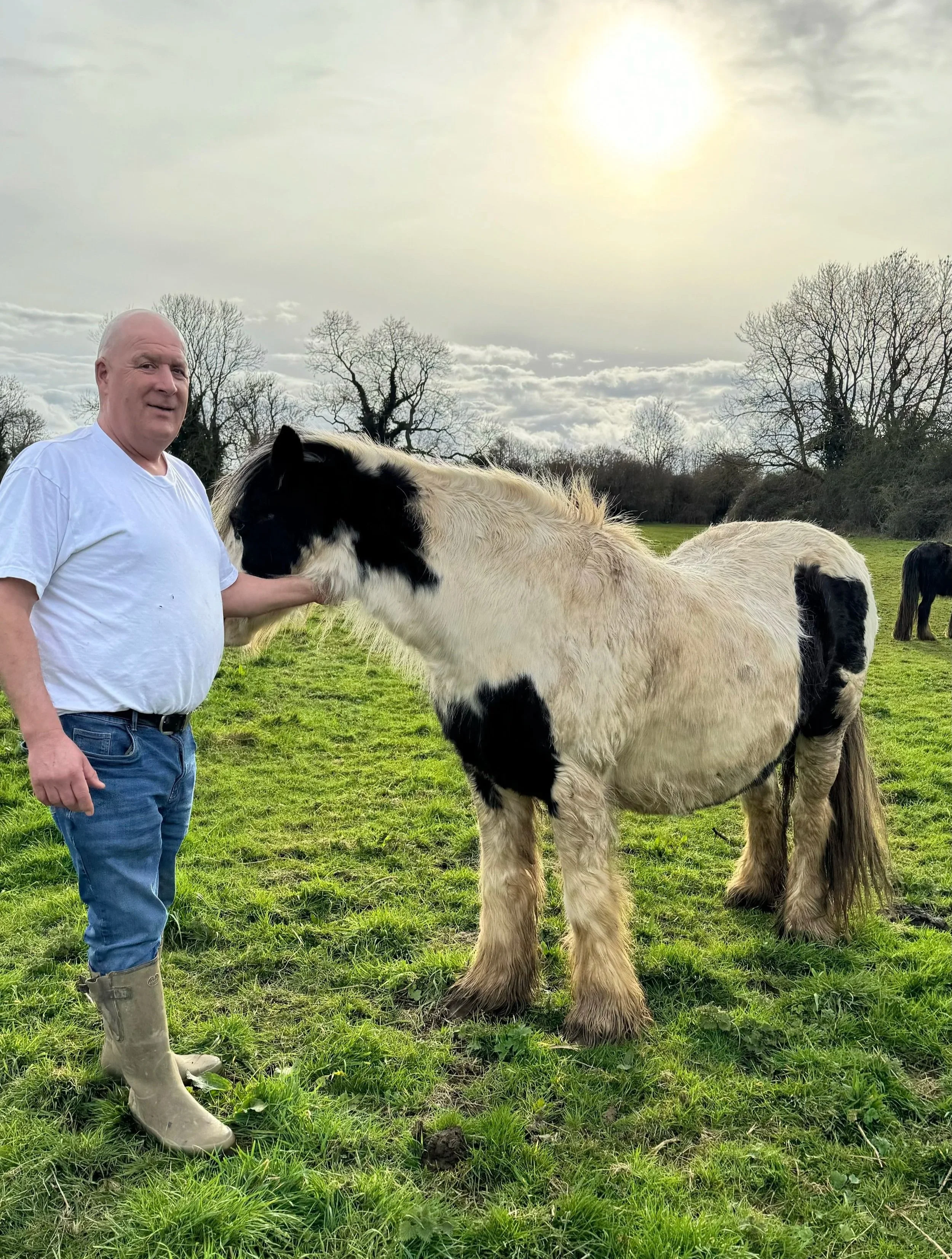
Jimmy McCann, hijo del célebre caballista Patsy McCann, posa con orgullo junto a The Cindy Mare (un homenaje a Cindy Thompson, cofundadora de GVHS), un ejemplo clásico de un Gypsy Vanner de Línea Patrimonial™ (Heritage Line™).
■ LA PENALIDAD DE LAS SIETE GENERACIONES
Buscar un caballo de linaje desconocido o cruzado solo por un pelaje llamativo es una apuesta financiera y genética enorme. La genética no negocia: una vez que se compromete la base de la raza con un solo cruce externo, se necesitan mínimo siete generaciones consecutivas de retrocruce hacia pie de cría Gypsy verificado por ADN para restaurar la pureza de la raza.
Para un programa de cría colombiano, siete generaciones representan casi cuarenta años de corrección meticulosa y costosa. Los maestros constructores originales, hombres como Patsy McCann, Fred Walker y Steve Down, se pasaron décadas fijando la predictibilidad genética para que los Vanners criaran "true" (fiel al tipo). Saltarse el trabajo de toda una vida por un atajo cosmético es una falla de manejo que le deja al criador décadas de reparación genética por delante.
■ RECOMENDACIONES
Obtener todos los colores de pelaje exclusivamente de dentro de las líneas patrimoniales verificadas por ADN a través de GVHS, para garantizar tanto el carácter como la conformación.
Exigir certificados de ADN con parentesco calificado y marcado con asterisco (*) tanto del padre como de la madre, antes de comprar cualquier caballo.
Priorizar los siete estándares de conformación (hueso pesado, pecho ancho, lomo corto y grupa redondeada) por encima de cualquier preferencia estética de color.
Hacer pruebas a todo pie de cría prospecto para las mutaciones GYS1 (PSSM1) y Síndrome del Fell Pony (FIS), para proteger la salud de las futuras generaciones.
Compensar las deficiencias del pasto Kikuyu de alta altitud suplementando a diario con calcio libre y alimentos fibrosos especializados, bajos en almidón y altos en grasa.
■ EL PANORAMA COMPLETO
El Gypsy Vanner es un monumento cultural viviente, forjado en los caminos de Gran Bretaña por familias que vivían junto a sus caballos y valoraban la utilidad y el carácter por encima de todo. Cuando los criadores modernos tratan a estos animales como simples lienzos de color, devalúan un siglo entero de disciplina Romaní.
Si Colombia quiere consolidarse como un santuario legítimo para esta raza magnífica, debemos rechazar las transacciones rápidas de los negociantes de caballos. Debemos abrazar el rigor de los preservacionistas, criando con la disciplina absoluta que se requiere para mantener vivo, e inalterado, el sueño del pueblo Romaní.
“Pierde la genética y pierdes el emplumado. Pierde el emplumado y pierdes el temperamento. Pierde el temperamento y perdiste la visión.”